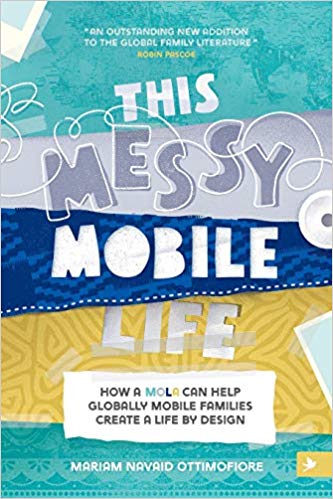
This unique book focuses on mobile families with extra layers of complexity – those who are multicultural, multilingual, multi-ethnic and/or multi-faith.
The author uses the metaphor of a South American shirt called a “mola,” made from layered fabrics that are carefully cut and stitched to reveal the colors of the inner layers. MOLA families, she explains, also have many layers. The “MOLA toolkit” helps families sort out the complexities and create a life “by design.” The author weaves together her own family’s story, examples of other MOLA families, insights and information, advice (both her own and that of other intercultural experts), and thought-provoking questions.
At the end of each chapter guided activities help families apply the insights and tools and Conversation Starters prompt meaningful family discussions.
This is a truly ground-breaking book that covers issues other books do not. Though some parts would be relevant for any Third Culture (or Cross-Cultural) family, it is really written for families that bring together -through marriage, birth or adoption- parents and kids who have a variety of nationalities, ethnicities or faiths, and/or speak a variety of languages.
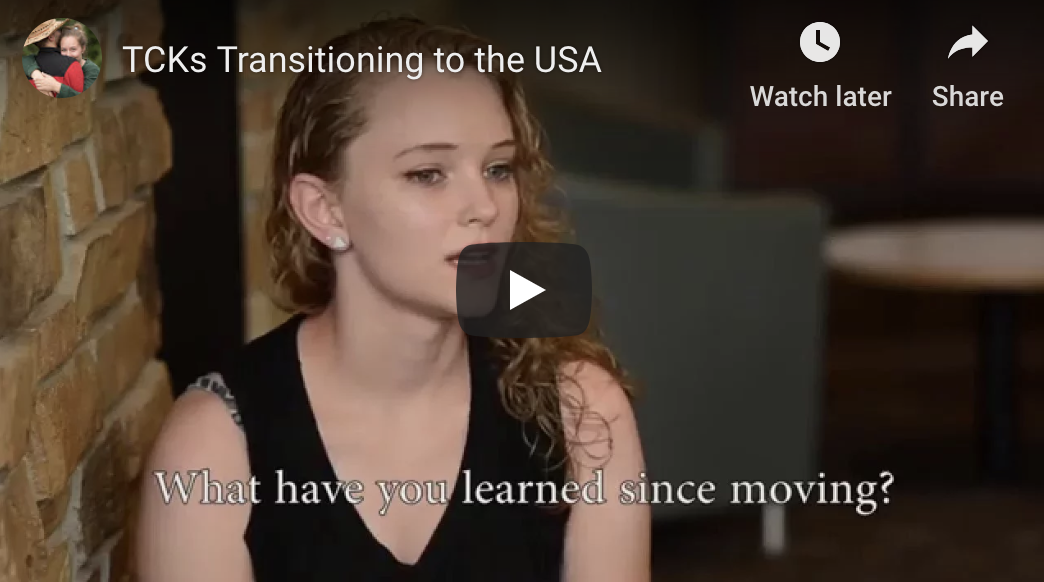
Reentering a passport culture is usually a tough transition for TCKs since they’re going through a cultural shift that the people around them can’t easily see. They look like the people around them but inside they are from a whole different place and way of thinking. TCKs who have recently gone through this reentry themselves share their experiences here–the good and the bad– and give advice about navigating reentry.
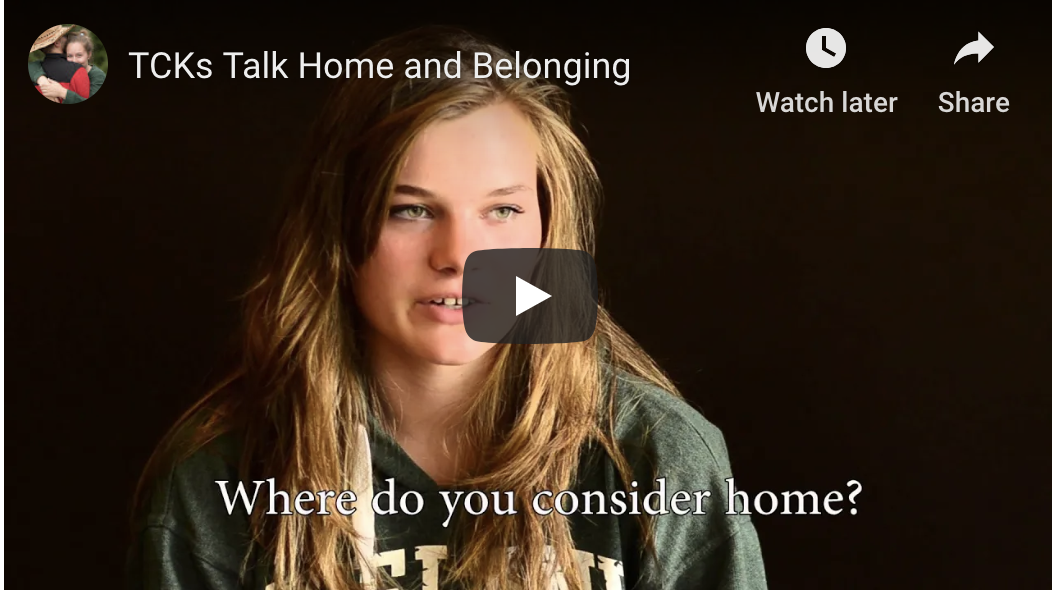
TCKs are notorious for hating the question “Where are you from?” Such a mobile childhood, surrounded by others moving all the time as well, can make it difficult to belong to one place or group of people. These TCKs were asked about their own experience of home and where they feel they belong.
How many homes have you lived in?
Where are you from?
Where do you consider home?
Where do you fit in best?
How has your sense of home changed over the years?
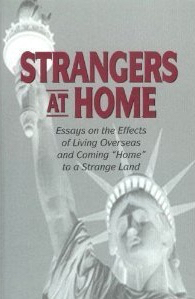
A compilation of essays on TCKs’ overseas and re-entry experiences written by some of the best known individuals in this field, this book is unlike other compilations on our website because these are not articles that have not been published elsewhere but essays written specifically for this book. It includes useful advice for parents seeking to help their children (especially teenagers) cope with the experience of returning to the U.S., a country often more
foreign to them than the host country. The chapter on “Religious Culture Shock” by Ruth Van Reken (an MK) will be of particular interest to missionary families.
A compilation of articles and poems written by and/or about TCKs, this book puts together some of the classic writings on the subject. Numerous articles offer insights on parenting in addition to giving a portrait of the TCK experience from various perspectives in this slim but valuable volume.
This book on returning to one’s home culture offers different perspectives than most others. It is written for the broader expatriate world and discusses specific groups (peace corp, military, missionaries etc.). After a look at the stages of re-entry, the author considers the particular needs of the employee, the spouse and children.