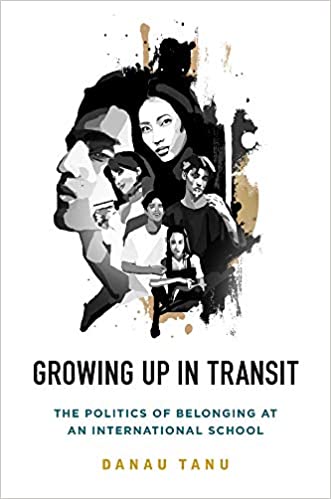
Growing Up in Transit: The Politics of Belonging at an International School

“Growing Up in Transit” is an academic resource that explores what all goes into creating a sense of belonging at international schools. Tanu gathers her data from fieldwork observation and interviews at an international school.  Her ethnographic study argues that the” international” identity that develops there is actually inherently Eurocentric. This feeds into a larger critique of Western-style international culture dominating global conversations on cross cultural issues.

This book is most relevant from an academic anthropological standpoint and may not be the most useful for parents and caregivers who are looking for practical advice on serving TCKs.

The chapters include:

  1. Being International
  2. The Power of English
  3. Living in “Disneyland”
  4. Chasing Cosmopolitan Capital
  5. The Politics of Hanging Out
  6. Invisible Diversity
  7. Race and Romance
  8. Whose United Nations Day?

The Grief Tower: A Practical Guide to Processing Grief with Third Culture Kids

This is a short but eminently practical book about helping Third Culture Kids process emotions related to grief and trauma.  Lauren Wells, herself an adult TCK, applies research on the impact of Adverse Childhood Events (ACEs) to TCK experience, noting the various types of experiences that may leave TCKs with unresolved grief and pain.

She then uses the term Grief Tower to paint a picture of how painful experiences may stack up when TCKs don’t have the opportunity or support to process them.  And what happens when the tower gets too high?  It comes crashing down, making a tremendous mess!  To prevent that, Lauren offers practical activities parents and TCKs can do to purposefully deconstruct those Grief Towers piece by piece.

This little book is quick and easy to read, and whether you are an expat parent, a professional working with TCKs, or even a TCK yourself, it is well worth your time.

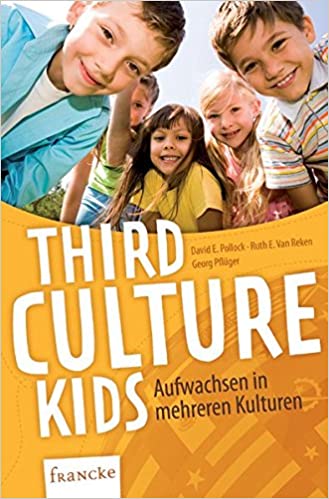
Third Culture Kids: Aufwachsen in mehreren Kulturen

Ob in der Auslands-Niederlassung einer Firma, einer Missionsstation oder einer diplomatischen Vertretung – jährlich steigt die Zahl der Kinder, die in unterschiedlichen Kulturkreisen aufwachsen. Authentisch und sorgfältig recherchiert beschreibt dieses Buch, was das Leben dieser sogenannten ‘Third Culture Kids’ ausmacht, welchen besonderen Problemen sie begegnen und welche speziellen Chancen sich ihnen eröffnen. Denn unmittelbarer als ihre Altersgenossen lernen diese Kinder sowohl die Freuden des Entdeckens als auch die Erfahrungen schmerzhaften Verlustes kennen. Es gelten andere Gesetze für ihren Reifungsprozess, sie gehen andere Wege auf der Suche nach ihrer Identität und sie sind herausgefordert, jenseits aller Ortswechsel eine Heimat zu finden. In Interviews, Gedichten und Berichten lassen Pollock und Van Reken die TCKs zu Wort kommen. Aus ihren Zeugnissen arbeiten sie die charakterlichen und emotionalen Grundstrukturen heraus, die Kinder mit diesem Hintergrund in der Mehrzahl entwickeln.


This is the German edition of THIRD CULTURE KIDS by David Pollock & Ruth Van Reken

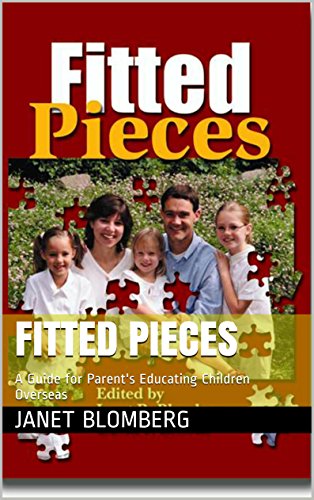
Fitted Pieces: A guide for parents educating children overseas

With over 90 essays in this collection for parents educating children overseas, it is indeed a comprehensive guide to TCK educational issues. Covering a large range of topics from choosing a national school to second-language learning to online learning, this volume will answer most questions parents have about educating their child overseas. With the essay format, it’s easy to pick which topics are most relevant to read (because at 667 pages, I doubt most people will finish the whole thing). One downside to this volume is that it is on the older side, being published in 2001, and the overseas educational world has changed in the time since its publication. Here are the essay sections covered:

  1. Basic Pieces
  2. Child Development Pieces
  3. Cross-cultural pieces
  4. Educational Development Pieces
  5. Cross-cultural Education Pieces
  6. Home Education Pieces
  7. National School Pieces
  8. Looking for some other pieces

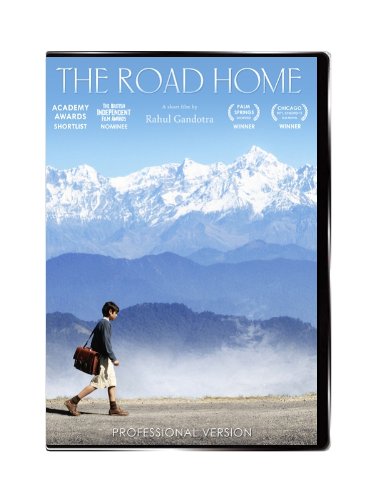
The Road Home (Professional Version)

* See below for a description of the film *

WHY CHOOSE THE PROFESSIONAL DVD?

SHOW THE FILM TO A GROUP:  With the Unlimited Public Screening License you can show the film as many timesas you’d like in classrooms, seminars, conferences, and public settings of any size.

LEAD A GROUP DISCUSSION:  Get people talking using the Discussion Question Insert designed to help your audience discover how the film’s message relates to their lives.  With sets of questions tailored to younger and older students, parents and professionals, you’ll find the right ones for any group.

DEEPEN YOUR UNDERSTANDING:  Gain new insight from two Professional Commentaries in which TCK experts Ruth Van Reken and Heidi Tunberg describe and explain the Third Culture Kid experience and highlight TCK themes in the film.

SPEAK YOUR AUDIENCE’S LANGUAGE:  Choose one of fourteen subtitle languages to best fit your audience (languages listed below) [Also on the Collector DVD]

GO BEHIND THE SCENES:  Hear Director Rahul Gandotra talk about the life experiences that inspired the film in two Director’s Commentaries Get more of the story with the alternate beginning and other deleted scenes, behind-the-scenes footage, and more.  [Also on the Collector DVD]

Purchase the Professional DVD from Amazon here.

Parents, caregivers and educators of TCKs can order Professional DVDs at a discount by emailing Heidi Tunberg.

Film Description:

“Growing up in England, ten-year old Pico never wanted to go to boarding school in the Himalayas, and despite the beauty there, he struggles to fit in. When he’s bullied for insisting he’s British in spite of his Indian heritage, he runs away, determined to return to his home in London. As he journeys through a country foreign to him, Pico encounters others who mistake him for an Indian boy, forcing him to face the painful truth that the world does not see him the way he sees himself.”

This semi-autobiographical film, shot in the Himalayas around Woodstock International School, is a masterpiece.  Breathtakingly beautiful, it was shortlisted for the Oscars and nominated for the BAFTAs (Britain’s Oscar equivalent) as well as winning scores of awards at film festivals around the world.  But for those who understand the experience of being a Hidden Immigrant – where how you look outside doesn’t fully match how you feel inside – it is more than a lovely movie.  It is also heart-stirring.  It illustrates that experience with poignancy and humor, evoking laughter and often a few tears.  I have literally watched it over 100 times, and it never gets old.  

The writer and director spent the first 9 years of his life in the UK and Saudi Arabia before returning to his parents’ homeland in India.  The film is loosely based on his early days at Woodstock International School.

Read more about the film or watch it online for free at the director’s website

Dialogue:  English & Hindi (with English subtitles for the Hindi)

Subtitles (DVD version):  English (full dialogue), French, German, Spanish, Italian, Portuguese, Chinese, Japanese, Korean, Tagalog, Bahasa Indonesia, Thai, Greek, and Arabic

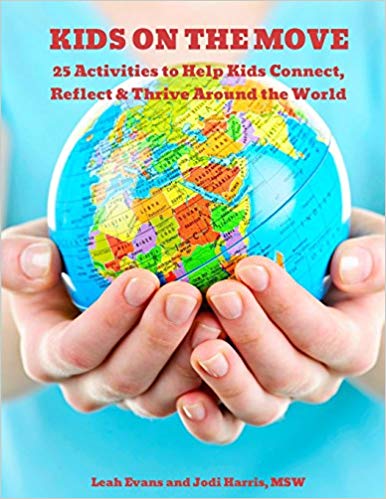
Kids on the Move: 25 Activities to Help Kids Connect, Reflect and Thrive Around the World

Third Culture Kids live in world filled with goodbyes and cultural adjustments and they may not always know how to express and process the complicated thoughts and feelings that arise as they navigate those experiences. This book offers simple exercises that kids or teens can do to better connect with their inner experiences. It offers tools to help them gain insight and understanding and to learn healthy ways to handle their feelings.

The topics and types of activities vary widely. They include such things as recollecting favorite things, learning to problem solve, creating a family tree, reflecting on identity, constructing a life timeline and much more.  Some activities are specifically related to TCK mobility or cross-cultural experiences while others are simply skills for building emotional health.

Worksheets are simply drawn.  Some are suitable for younger children, especially if a parent could read the “instructions” to them. Older children or teens could work through the book independently or parents (or teachers or counselors) could go through the book with kids/teens, using the activities to spark reflection and discussion.

Reading level: 6 to 13 years