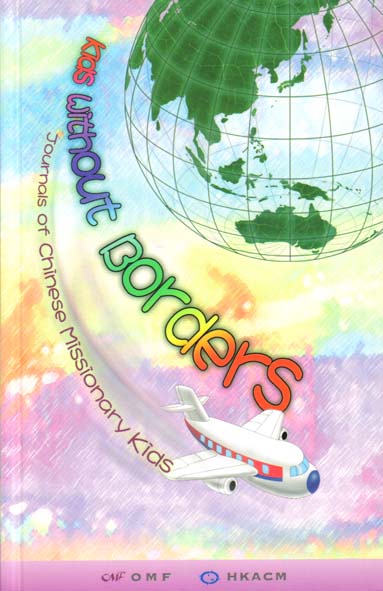
This collection of writings from Asian MKs who have lived all around the world gives insight into the experiences of MKs of all ages. The book is split into three sections: Children, Adolescents and Adults with journal entries from different MKs on a variety of subjects from school to goodbyes to rootedness. Most of the writers have a connection to Hong Kong (where the editor is based) and have at least one Chinese parent but their experiences are varied. Many issues unique to Asian MKs are addressed, like differences in education systems, maintaining Chinese roots, and cultural differences within the family.
This book would be great for Asian TCKs processing their own experiences, Asian missionary parents and those working with Asian MKs. Understanding a TCK perspective other than the Western one is beneficial to all TCK workers, as well.
The Becker family returns in this book, less sympathetically portrayed than in Portofino. Mr. Becker’s foul-mouthed, foul-tempered mother has moved in with the family while she recovers from a broken hip, and the family is not taking it well. Calvin, now age fifteen, spends much of his time dreaming of running away to Italy to his beloved Jennifer. There are quite a few sexual references (mostly in fantasy form) throughout the book. Still a funny book in places, I found myself laughing less than I did while reading Portofino. More often I sat shaking my head in disgust at the very un-Christlike behavior of Calvin’s self-righteous parents (surely any mission board’s worst nightmare come true). The Beckers do not paint a very flattering portrait of missionaries and their work and they do not seem likable in this book.
Written from the perspective of Calvin Becker, son of missionaries in Switzerland, this book describes two family vacations in Italy. The Washington Times reviewer describes the book well: “Calvin’s observations reveal the ironies of a family that speaks in biblical phrases but faces all-too-human foibles… Under Mr. Schaeffer’s graceful rendering, this is a story of sympathetic characters, a deft feat considering some of their narrow views.” The book is often humorous, though sometimes at the expense of Calvin’s Reformed (i.e. narrowly Calvinistic) family.
A book from a bygone era (so rather dated in its style), this is a story about Ellyn Secord, daughter of medical missionaries, who hates the word “missionary” and all it stands for. She feels her parents’ career deprived her of their attention and of a real home. In her anger, she lashes out at those around her. When she learns through painful experience that this brings her no happiness either, she must confront her view of God and decide what to do about her relationship with him. Written by the mother of Bruce Lockerbie who did some of the early research on MKs.
Jon Kregel’s nonfiction, first person account of his life journey from missionary kid to professional soccer player (and teammate of soccer superstar Pele) to drug dealer and prison inmate. Jon writes about what really happens in the “glamorous” world of easy money and drugs. Against a backdrop of self-destruction and hopelessness emerges an inspiring, challenging story of the faithfulness of God and of forgiveness and reconciliation.

In 1959, the bad-tempered missionary Nathan Price leaves Georgia with his family “to bring salvation to the darkness” of Africa. Though rejected by the Baptist missionary board for lack of psychological fitness, he defies them, moving his wife and four daughters unsupported to the jungle to save the “savage” citizens of Belgian Congo. Set against Congo’s fight for independence, the story is narrated in turn by Nathan’s wife and four daughters. It spans 3 decades and follows the family’s falling apart and coming back together. It’s wonderfully written. The subtle transformation of the mono-cultural daughters into culturally-blended TCKs is illustrated deftly. TCKs from that part of the world will delight in the vivid descriptions of life in Congo – some poignant, some laugh-out-loud funny. That said, it is a story of pain and loss that paints an extremely bitter picture of Missions, and that may make it difficult for some MKs to appreciate. The author is a TCK (but not an MK) who lived in Congo in this era.