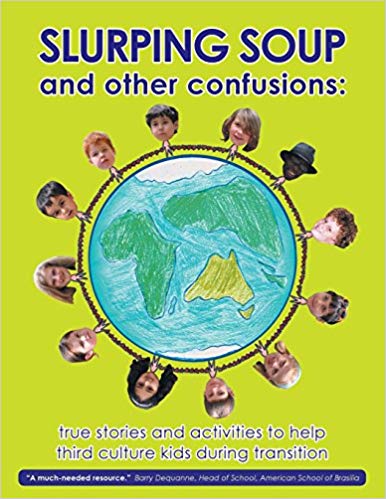
Of all the books I’ve reviewed for kids moving internationally, this is by far my top pick! Unlike other activity books, it is not about moving to a new house but about things kids encounter when adjusting to a new culture and living abroad.
Each of the twenty-three “chapters” covers a different challenge a TCK might face living internationally – encountering “weird” things, being stared at by strangers, missing friends, missing out on activities with extended family, feeling connected to several flags & countries and many more. Each section starts with one or two stories by TCKs, followed by a brief insight or suggestion written by the parent. An activity then helps kids express themselves, problem-solve, or gain a new perspective.
The book is illustrated with colorful children’s drawings and photos of the actual children who wrote the stories (the authors’ children). The children themselves come from all over the world and live all over the world.
As a TCK Caregiver, this is the book I give to all our parents when they move overseas for the first time with children.
You can download a PDF with four sample “chapters” at the book’s website: http://www.slurpingsoup.com/book/preview-the-book/
Reading level: 3-12 years
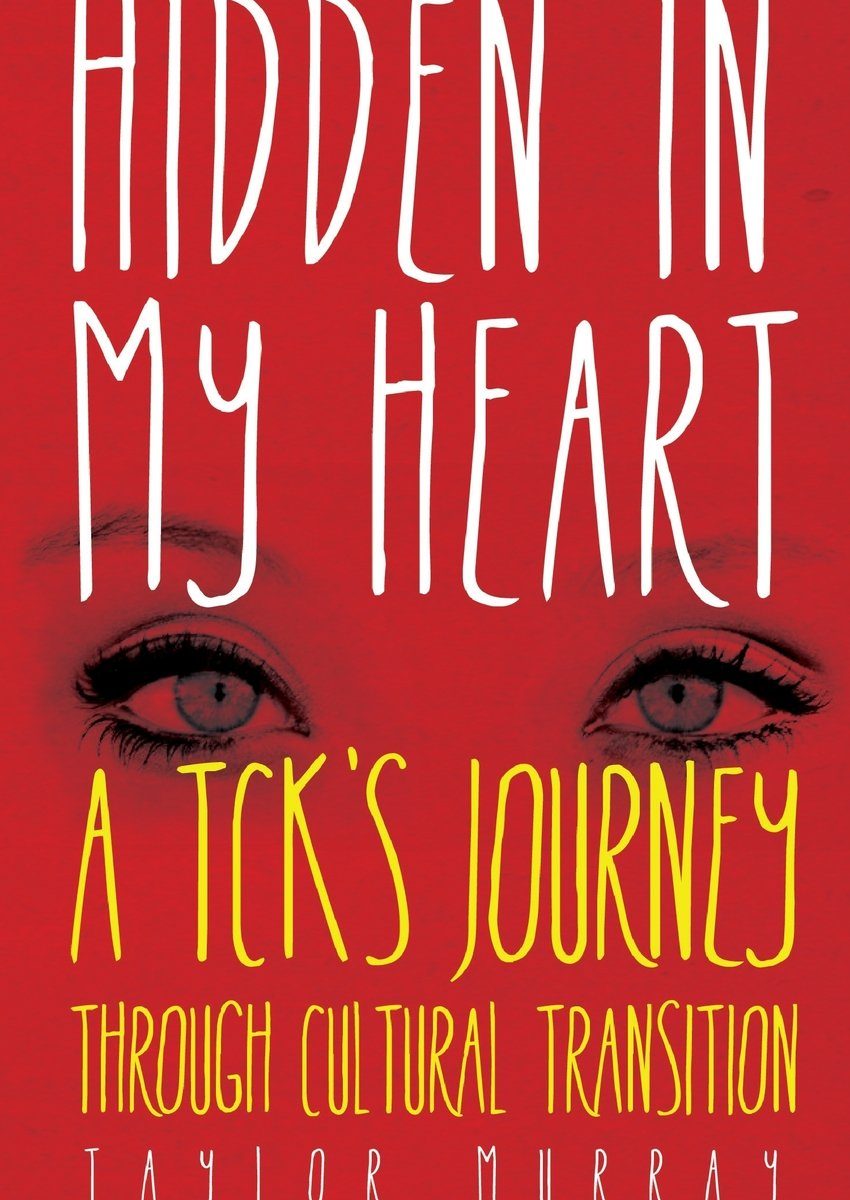
In a series of very vulnerable journal entries, 14-year-old Taylor processes her emotions of her transition to Japan when she was 9 and the difficulties and joys of life there. While on home assignment in the US, Taylor finally let herself grieve losses and name her emotions. The book is split into 2 sections: the first part is focused on her pain and in the second is able to see the joys in her experiences.
It can be hard to read about her loneliness and how desperately she wanted to fit in with the Japanese people around her. I just wanted to give her a big hug (but I don’t know her and that would be weird!). Seeing how God put caring people in her life even when she couldn’t recognize them as blessings is encouraging and a reminder that God is with all of us in our grief and transition and language learning and every difficulty.
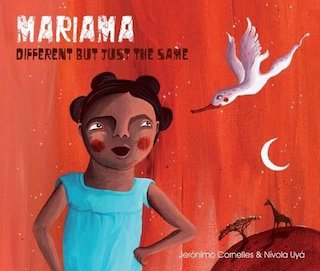
Mariama traveled by car, train, boat and plane from her home in Western Africa to a new world in a grey city. She has to learn a new language, a new way to eat and even a new way to play with friends. But even with all the differences, Mariama learns that children everywhere are still children. She made new friends who taught her how to live in her new home while she taught them (and the readers) about Africa, too.
This could be a story of a TCK or an immigrant child, but the themes overlap and the focus is on moving and cultural adaptation.
Available in Spanish here.
Reading level: age 3-6 years
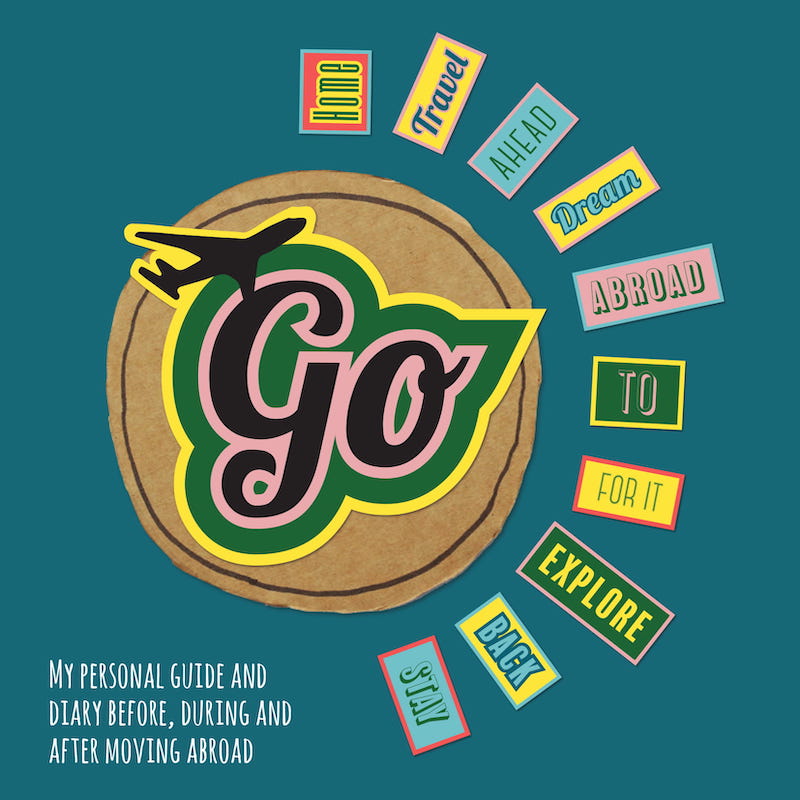
This gorgeous full color workbook for children and adolescents is a delight to look at and just as fun to read. Go! is divided into three sections: pre-field, entering a new country, and re-entry. A TCK can complete the whole book or just the section to applies to them at the time. Younger children will need help with some of the reading and projects, though many activities are drawing and not writing.
Go! helps TCKs to process their emotions (there is a whole page of emotions to choose from), record memories, say goodbye well and learn to make new friends. Parts of it are creative and fun and it is also very deep. I would have loved to have a workbook like this when I was young and I’m still tempted to fill mine out. It ships from Denmark (I believe it’s available in English and Danish) and at the time of writing this isn’t available on Amazon so be sure to allow time for it to arrive if you aren’t ordering within Europe. Order it here.
Reading level: age 6-13
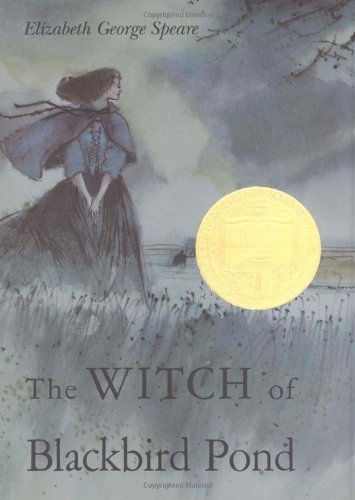
This story, often used in classrooms in the U.S., is actually about a TCK from the 1700s. Kit leads an idyllic life on her grandfather’s plantation in Barbados. His death, however, forces her to set out for the colonies to find her mother’s sister, always described as beautiful and carefree. She arrives unannounced in the bleak New England settlement, and struggles to fit into the household run by her stern, Puritan uncle and meek, though gentle, aunt. Accustomed to having slaves to care for her, Kit has difficulty learning the tasks required to keep a home running, and she often feels lonely and misunderstood.
By chance she discovers an old woman, shunned by the community for her Quaker faith, and in this new friend Kit finds a soulmate. Although the book is written in third person, its tone evolves as Kit adjusts to her new life. Extremely harsh in its presentation of Puritan life in the early parts of the book, it softens later on as Kit is able to understand and even enjoy aspects of her life in the colonies. Though ultimately she finds herself drawn to a broader life than she finds in the tiny settlement, she is able to appreciate its good points as well, giving her the ability be comfortable in either world.
Reading level: age 11-14 years
Adam knows that war is breaking out in the Middle East, where he lives in the fictional city of Abudai. But instead of fleeing back to Australia with his family, Adam slips away to look for his faithful dog Tara. Lost in the desert, he makes an unlikely friend in a camel boy running from his master. They must overcome cultural and language barriers (with plenty of misunderstandings of course) as they try to survive together and become true friends.
Reading level: age 10-13 years (with occasional swear words so parents be advised)