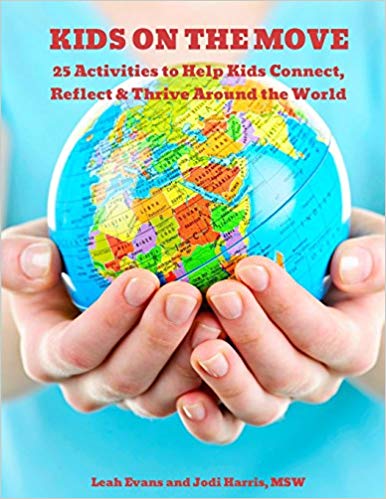
Third Culture Kids live in world filled with goodbyes and cultural adjustments and they may not always know how to express and process the complicated thoughts and feelings that arise as they navigate those experiences. This book offers simple exercises that kids or teens can do to better connect with their inner experiences. It offers tools to help them gain insight and understanding and to learn healthy ways to handle their feelings.
The topics and types of activities vary widely. They include such things as recollecting favorite things, learning to problem solve, creating a family tree, reflecting on identity, constructing a life timeline and much more. Some activities are specifically related to TCK mobility or cross-cultural experiences while others are simply skills for building emotional health.
Worksheets are simply drawn. Some are suitable for younger children, especially if a parent could read the “instructions” to them. Older children or teens could work through the book independently or parents (or teachers or counselors) could go through the book with kids/teens, using the activities to spark reflection and discussion.
Reading level: 6 to 13 years
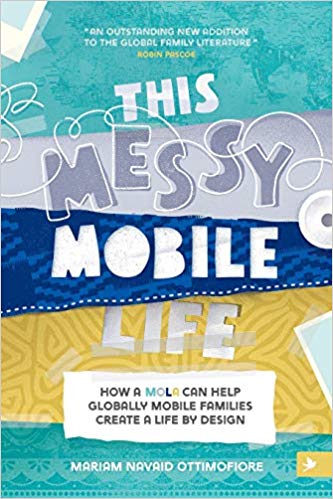
This unique book focuses on mobile families with extra layers of complexity – those who are multicultural, multilingual, multi-ethnic and/or multi-faith.
The author uses the metaphor of a South American shirt called a “mola,” made from layered fabrics that are carefully cut and stitched to reveal the colors of the inner layers. MOLA families, she explains, also have many layers. The “MOLA toolkit” helps families sort out the complexities and create a life “by design.” The author weaves together her own family’s story, examples of other MOLA families, insights and information, advice (both her own and that of other intercultural experts), and thought-provoking questions.
At the end of each chapter guided activities help families apply the insights and tools and Conversation Starters prompt meaningful family discussions.
This is a truly ground-breaking book that covers issues other books do not. Though some parts would be relevant for any Third Culture (or Cross-Cultural) family, it is really written for families that bring together -through marriage, birth or adoption- parents and kids who have a variety of nationalities, ethnicities or faiths, and/or speak a variety of languages.
Probably the earliest book devoted to the subject of raising children overseas, this book still has insight to offer on this topic. Werkman, a child psychiatrist, drew on his extensive experience as a consultant to the US State Department and Peace Corps in writing about TCKs. He covers moving preparations, initial adjustments, the children’s educational needs, the family’s medical and psychological requirements, and the return to the USA. While some of the particulars have changed over the years many things the author describes continue to be encountered and his suggestions are largely still relevant.
A compilation of articles and poems written by and/or about TCKs, this book puts together some of the classic writings on the subject. Numerous articles offer insights on parenting in addition to giving a portrait of the TCK experience from various perspectives in this slim but valuable volume.
This book on returning to one’s home culture offers different perspectives than most others. It is written for the broader expatriate world and discusses specific groups (peace corp, military, missionaries etc.). After a look at the stages of re-entry, the author considers the particular needs of the employee, the spouse and children.
This practical older book covers the re-entry process starting on the field. It talks about how to prepare and leave well, as well as how to adjust back in North America. It also offers lots of ideas on smoothing the transition for adults and children. The focus of this book seems to be more on the adult missionary and written for the parents of MKs.