
Léa, une jeune adolescente de 13 ans vivant à Nantes, adore le théâtre et sa bande de copines qu’elle connait depuis toujours. Seule ombre au tableau, elle vit seule avec son père. Sa maman réside depuis six mois à Chicago pour des raisons professionnelles. Ses parents décident de réunir à nouveau leur petite famille. Pour cela, Léa et son père doivent quitter la France pour les Etats-Unis. L’annonce de cette nouvelle est loin de satisfaire Léa, une adolescente vive et déterminée à prendre sa vie en main. Cette histoire plaira tant aux jeunes ados rêvant d’ailleurs qu’à ceux directement concernés par la problématique de l’expatriation. Ils se reconnaîtront dans les états d’âme de Léa, ses humeurs, ses joies et ses peurs. Un livre pour les pré-ados et jeunes ados expatriés ou sur le point de le.
Thirteen year old Léa lives in Nantes. She loves the theater and the friends she has known her whole life. The only downside is that she lives alone with her father because her mother has been working in Chicago for six months. When Léa’s parents decide to reunite their little family, she and her father must leave France for the United States – which is hardly good news to Léa, a lively teenager determined to take charge of her life.
This story will appeal to pre-teens and young teen Third Culture Kids, or about to become TCKs. They will recognize themselves in Lea’s feelings – her joys and her fears.
THIS BOOK IS ONLY AVAILABLE IN FRENCH
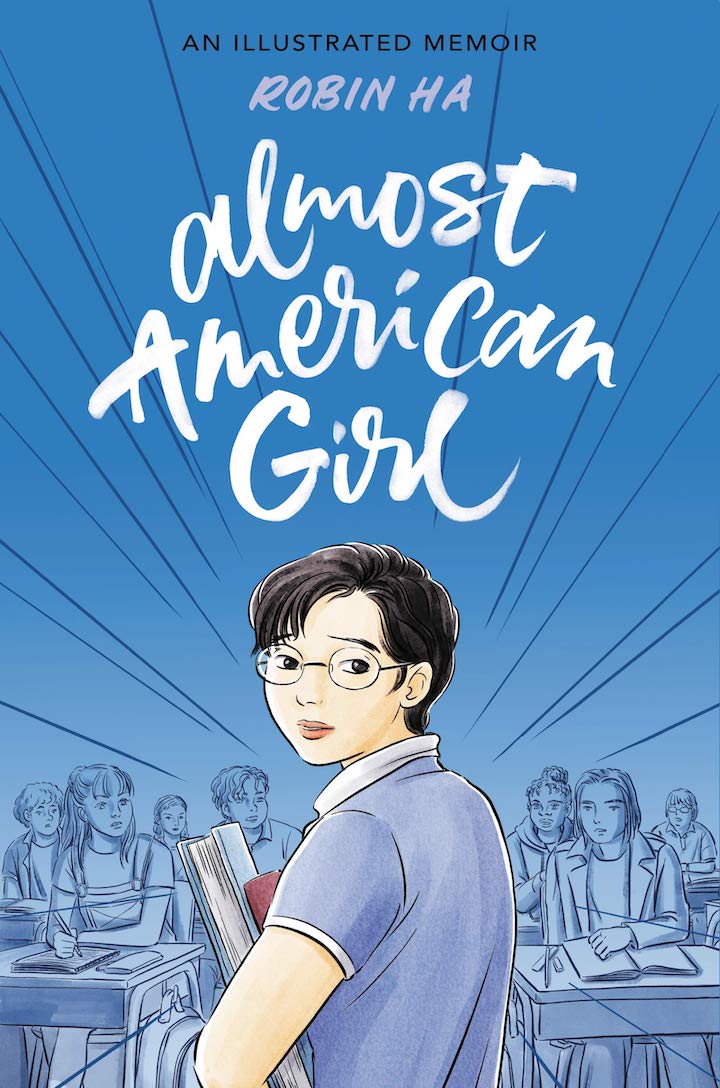
Though more of an immigrant story than a TCK one, Almost American Girl has many strong TCK themes throughout the graphic novel. This true story is told as a memoir in pictures by Korean American author Robin Ha. Robin is suddenly moved to Alabama, USA from Seoul, Korea without even being able to say goodbye to her friends or bring her most precious belongings. She just thought they were going on vacation! Now she has a new step-family who don’t seem to like her and she can’t understand anyone at her new school.
Despite the culture shock, her loneliness and her anger at her mother for suddenly uprooting her, Robin eventually makes friends and finds solace in comics and manga. She gets better at English and is surprised to find so many signatures in her yearbook at the end of the year. But when her mother’s new marriage fails, they move yet again.
In Virginia, Robin finds more international kids like herself and even Korean friends, and finally feels like she belongs. At the end of the book she visits Korea for the first time since she left and realizes that the country she has been longing for doesn’t even feel like home any more. She has changed and so have her old friends in Seoul. “I didn’t exactly fit in Korea or America,” she thinks to herself. And that was okay.

This TCK parenting book takes a proactive approach to raising children, looking at how early childhood experiences and the emotional health of the parents contribute to raising healthy kids. Lauren Wells emphasizes the very real effects that childhood experiences, especially trauma, exert in adult health.
This book is also very practical. It will teach parents how to address trauma in the moment so that the grief doesn’t pile up and have lasting effects. Different talking points, activities and conversation starters are given for children of different ages so that you have the tools you need to address issues or proactively build resilience throughout your child’s whole growing up.
If I had a complaint about this book it would be that she can focus on one segment of TCK tendencies and ignore the others. For example, she focuses heavily on the “chameleon” nature of TCKs to blend in, and less on “screamers” who refuse to conform or “wallflowers” who try to disappear during transitions. As a screamer myself, I felt rather underrepresented. She also focuses on MKs who get the itch to move every few years but I know many MKs who didn’t experience this at all. For some, they attach themselves to the first place they can settle into and never want to leave again. These TCKs may need a different kind of help.
Overall, this is an excellent book for parents, especially those parents of young TCKs who wish to build a solid foundation for their kids’ emotional health. It’s rather comprehensive without dragging itself out. Highly recommend.
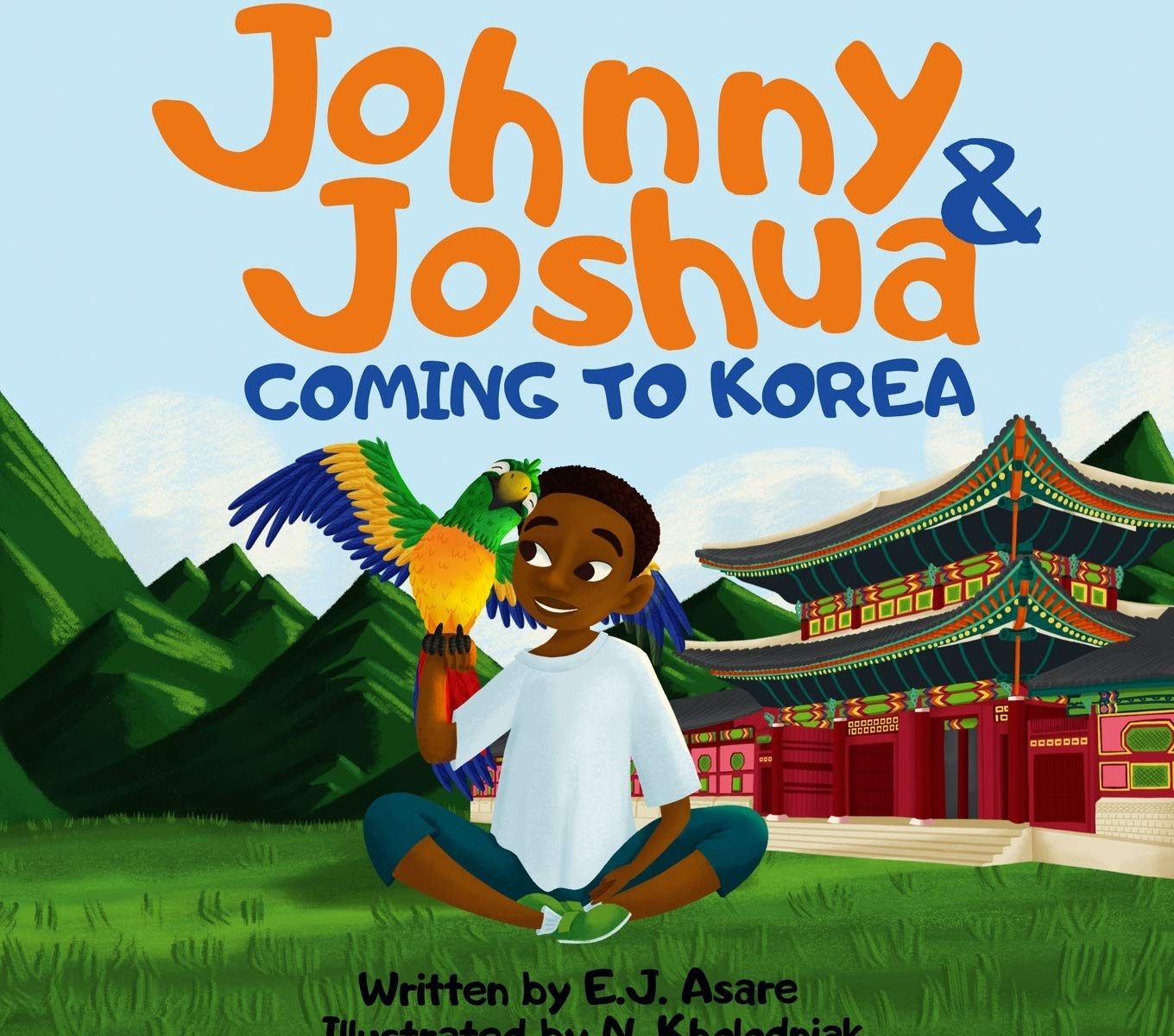
Joshua is from the U.S. but he lives in Ghana. His second best friend (after his dad) is his pet parrot named Johnny . But to his dismay, he has to leave Johnny behind when he and his dad move to Korea to be with his mom.
When he arrives in Korea, everything is very different. Joshua notices that everyone in Korea is staring at him and his parents! Most Koreans haven’t seen someone his color before and they want to touch his hair and take pictures with him. His mom keeps politely telling people not to touch him but Joshua feels like a star! Everyone wants to talk to him.
At the end of the story, Joshua confides in his parents that he still misses his parrot Johnny. They encourage him to take his soccer ball and meet new friends, which he does. He even meets a beautiful Korean crane who he asks to be his new best friend.
Besides covering themes of moving to a new country and settling in, this fantastic little picture book addresses the difficulty of having to leave much-loved pets behind. And it stands out among TCK children’s books because it features an African-American family, and one that moves because of the mom’s job.
Reading level: age 4-8
A little boy is woken up by his parents in the middle of the night and told they have to leave their home and friends and belongings behind. At least he gets to bring his rabbit. On the journey, there’s lots of hurrying and then waiting and the boy’s tummy hurts because he’s trying to keep in his whining. An old lady tells him the story of another boy who had to leave his home suddenly and go to a new home. He grew up to be a great teacher (Jesus).
This sweet short story could be helpful for children who have had to move suddenly or had a difficult time moving. The illustration is sweet and the boy’s squirminess is so relatable!
Reading level: 4 to 7 years
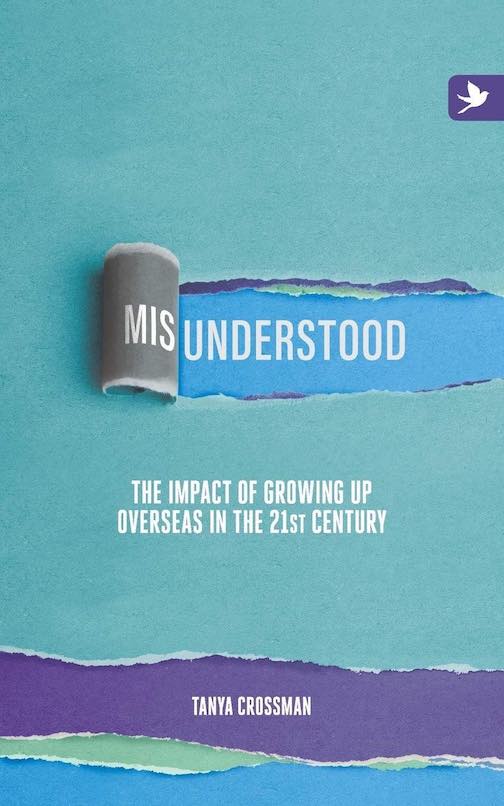
Misunderstood is a decent introductory book for those looking to better understand TCKs, written for TCKs themselves, parents, and those who care for TCKs (like counselors or those who work for the parents’ organizations). It goes into detail about the different types of TCKs (like military brats, missionary kids, etc.) and the pros and cons of different schooling options while outside your passport country.
The book is based on interviews that the author has conducted on a large sample of TCKs and included many quotes and stories to accompany each section. While this lends credibility to her book, it can also be misleading.
Being a TCK caregiver, I know many TCKs who would disagree with the generalizations that she makes. It seems she interviewed TCKs who identify strongly with their overseas experiences and have struggled in adapting to their passport cultures. She said every TCK she interviewed claimed reentry was “a particularly difficult experience” (pg. 211). I know several TCKs who would disagree and say the experience was not very difficult for them. Many TCKs adapt well to their passport culture and do not strongly identify with being a TCK, though these are probably the TCKs least likely to volunteer to be interviewed about TCK experiences.
So while the book as a whole is a good summary of TCK experiences in general, one has to keep in mind that her interview sample was likely skewed and many TCKs would say her generalizations about TCK beliefs and experiences do not fit them.