TCK author Ann Liang grew up between China and Australia and draws on her own childhood experiences to write “If You Could See the Sun,” a fun YA romance novel set in Beijing. The book is about Alice, a Chinese/ American scholarship student at an elite Beijing boarding school. Surrounded by wealthy students, Alice is focused on her grades and set on beating her academic rival Henry. Then suddenly Alice goes from unpopular nobody to actually invisible. She can’t control when she turns invisible but still decides to use her powers for something useful and starts a lucrative side-business. As the jobs she takes become higher and higher stakes, she has to decide what she can justify for the sake of income.
It’s definitely a fun read, and I loved the chemistry between the academic rivals. The ending was a bit morally questionable and there is a good amount of swearing, so if you’re put off by that take note. No sex scenes, just a kiss. I’d recommend this book for high schoolers or older, though some middle schoolers would enjoy it as well.
This isn’t written as a “TCK book” but instead marketed to a wider audience. I enjoyed the international school context and seeing some reflections from the main character on being bi-cultural and the way moving countries affected her. The TCK themes are more subtle since the focus is on the characters and the plot. This book actually came to my attention in a list of other YA fiction since it’s a genre I enjoy reading for fun, and I noticed that the main character happened to be a TCK!
This autobiographical collection of essays was a joy to read. Adele Barlow is a TCK with Malaysian and Kiwi parents who grew up between Hong Kong and New Zealand. Her search for identity and meaning is a very relatable TCK issue and she writes about it in a fresh way, sharing anecdotes from her moves, relationships and therapy sessions.
I’ve read a lot of stories and essays about TCK identity and sometimes get tired of them but I enjoyed Barlow’s writing style and her candidness. I found myself cheering on her progress and eager to see the conclusions she came to in her self reflection.
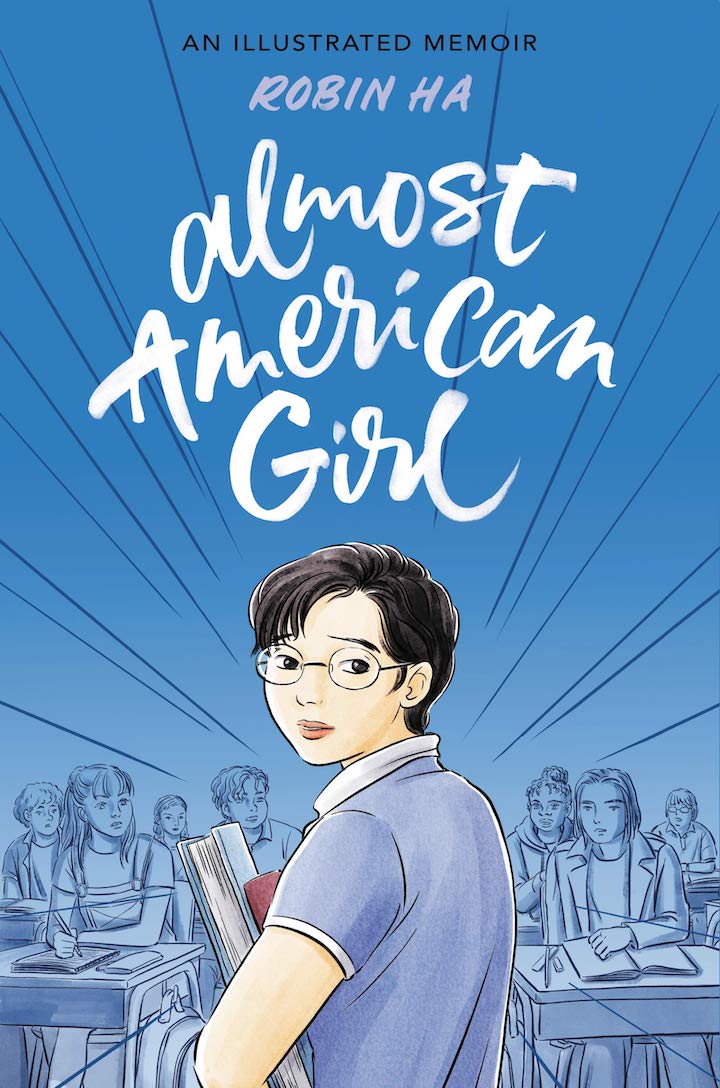
Though more of an immigrant story than a TCK one, Almost American Girl has many strong TCK themes throughout the graphic novel. This true story is told as a memoir in pictures by Korean American author Robin Ha. Robin is suddenly moved to Alabama, USA from Seoul, Korea without even being able to say goodbye to her friends or bring her most precious belongings. She just thought they were going on vacation! Now she has a new step-family who don’t seem to like her and she can’t understand anyone at her new school.
Despite the culture shock, her loneliness and her anger at her mother for suddenly uprooting her, Robin eventually makes friends and finds solace in comics and manga. She gets better at English and is surprised to find so many signatures in her yearbook at the end of the year. But when her mother’s new marriage fails, they move yet again.
In Virginia, Robin finds more international kids like herself and even Korean friends, and finally feels like she belongs. At the end of the book she visits Korea for the first time since she left and realizes that the country she has been longing for doesn’t even feel like home any more. She has changed and so have her old friends in Seoul. “I didn’t exactly fit in Korea or America,” she thinks to herself. And that was okay.

This TCK parenting book takes a proactive approach to raising children, looking at how early childhood experiences and the emotional health of the parents contribute to raising healthy kids. Lauren Wells emphasizes the very real effects that childhood experiences, especially trauma, exert in adult health.
This book is also very practical. It will teach parents how to address trauma in the moment so that the grief doesn’t pile up and have lasting effects. Different talking points, activities and conversation starters are given for children of different ages so that you have the tools you need to address issues or proactively build resilience throughout your child’s whole growing up.
If I had a complaint about this book it would be that she can focus on one segment of TCK tendencies and ignore the others. For example, she focuses heavily on the “chameleon” nature of TCKs to blend in, and less on “screamers” who refuse to conform or “wallflowers” who try to disappear during transitions. As a screamer myself, I felt rather underrepresented. She also focuses on MKs who get the itch to move every few years but I know many MKs who didn’t experience this at all. For some, they attach themselves to the first place they can settle into and never want to leave again. These TCKs may need a different kind of help.
Overall, this is an excellent book for parents, especially those parents of young TCKs who wish to build a solid foundation for their kids’ emotional health. It’s rather comprehensive without dragging itself out. Highly recommend.
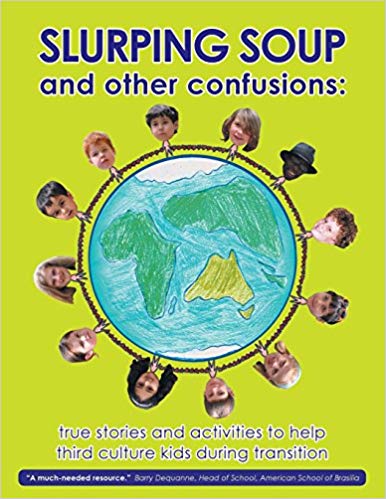
Of all the books I’ve reviewed for kids moving internationally, this is by far my top pick! Unlike other activity books, it is not about moving to a new house but about things kids encounter when adjusting to a new culture and living abroad.
Each of the twenty-three “chapters” covers a different challenge a TCK might face living internationally – encountering “weird” things, being stared at by strangers, missing friends, missing out on activities with extended family, feeling connected to several flags & countries and many more. Each section starts with one or two stories by TCKs, followed by a brief insight or suggestion written by the parent. An activity then helps kids express themselves, problem-solve, or gain a new perspective.
The book is illustrated with colorful children’s drawings and photos of the actual children who wrote the stories (the authors’ children). The children themselves come from all over the world and live all over the world.
As a TCK Caregiver, this is the book I give to all our parents when they move overseas for the first time with children.
You can download a PDF with four sample “chapters” at the book’s website: http://www.slurpingsoup.com/book/preview-the-book/
Reading level: 3-12 years
This unique book focuses on mobile families with extra layers of complexity – those who are multicultural, multilingual, multi-ethnic and/or multi-faith.
The author uses the metaphor of a South American shirt called a “mola,” made from layered fabrics that are carefully cut and stitched to reveal the colors of the inner layers. MOLA families, she explains, also have many layers. The “MOLA toolkit” helps families sort out the complexities and create a life “by design.” The author weaves together her own family’s story, examples of other MOLA families, insights and information, advice (both her own and that of other intercultural experts), and thought-provoking questions.
At the end of each chapter guided activities help families apply the insights and tools and Conversation Starters prompt meaningful family discussions.
This is a truly ground-breaking book that covers issues other books do not. Though some parts would be relevant for any Third Culture (or Cross-Cultural) family, it is really written for families that bring together -through marriage, birth or adoption- parents and kids who have a variety of nationalities, ethnicities or faiths, and/or speak a variety of languages.