This novel follows Adelaide, who has lived her whole life in a small Ethiopian village with her anthropologist father, disengaged mother and two younger sisters. When she’s told that her family is moving to South Carolina you can’t help but cringe in thinking about this naive village girl leaving her village for the first time. Adelaide isn’t excited about it either and vows to come back and marry her childhood sweetheart.
Most of the story follows Adelaide’s friendship with the African American students who have enrolled in her white school. It’s 1964 in the South of the US and racial tensions are high. No one can understand why a white girl is friends with the black students and Adelaide can’t understand why it’s such a big deal since she has always been friends with black Africans.
This TCK novel follows some typical themes of culture shock and reentry which were rather extreme for Adelaide as she is basically as sheltered as someone can be. I also loved how Kindberg looked at racism and how white expats can be embracing of other cultures overseas and racist in their own countries. The end of the story also shows how difficult and different it can be to go back to where we grow up as an adult and realize we don’t fit like we used to.
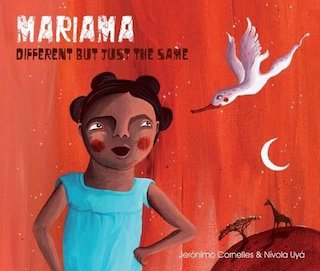
Mariama traveled by car, train, boat and plane from her home in Western Africa to a new world in a grey city. She has to learn a new language, a new way to eat and even a new way to play with friends. But even with all the differences, Mariama learns that children everywhere are still children. She made new friends who taught her how to live in her new home while she taught them (and the readers) about Africa, too.
This could be a story of a TCK or an immigrant child, but the themes overlap and the focus is on moving and cultural adaptation.
Available in Spanish here.
Reading level: age 3-6 years
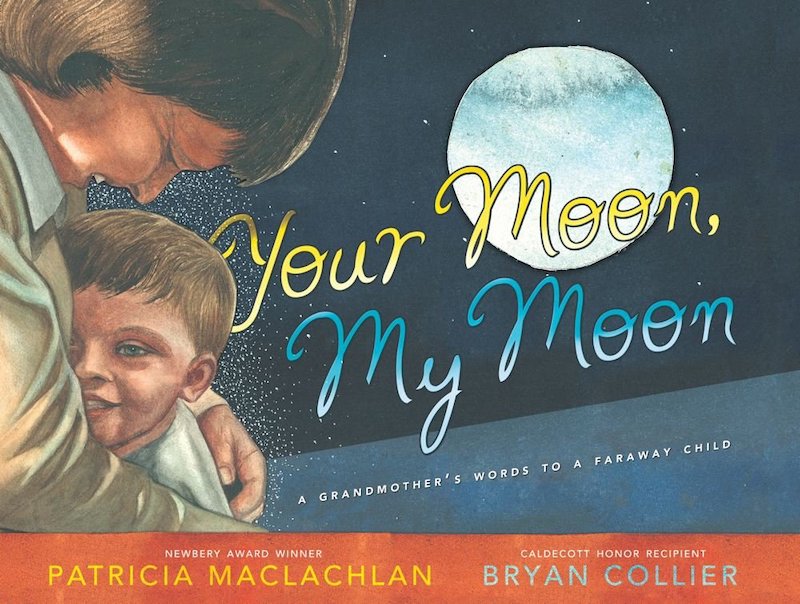
This sweet story is told from a grandmother’s perspective as she reflects on how her daily life in the United States compares to her grandson’s in Africa. While she skates on a frozen lake, her grandson is playing in the sand by a tropical pool. She sleeps under a quilt and he sleeps under a gauzy mosquito net. They both love dogs and her dogs miss him. But she knows that each night they both look at the same moon.
This would be a sweet book for children overseas who miss their grandparents and extended family. Reading it could be a great conversation starter for talking about memories of times spend with their own grandparents and thinking of ways their own lives are different or similar from their far away relatives.
Reading level: age 4 to 8 years
Not to be confused with the 2001 movie of the same name, this film is set in the 1950s, loosely a story of a French diplomatic family in colonial Africa. France Dalens returns to Cameroon as a young adult, and finds herself recalling her childhood living there at a remote outpost. With her parents emotionally distant and preoccupied, her closest friend is the regally handsome houseboy, Protee. As an assortment of Europeans pass through the station staying for extended periods, tension builds in the home. When the advances of France’s lonely mother are rebuffed by Protee, France’s friendship with him is altered as well. This movie is somewhat incohesive and the parts about France as an adult seemed to lack depth or significance (this may reflect a difference in style between American and French filmmaking). Nevertheless, most TCKs would enjoy this portrait of a foreign childhood.
Rated: PG-13

In 1959, the bad-tempered missionary Nathan Price leaves Georgia with his family “to bring salvation to the darkness” of Africa. Though rejected by the Baptist missionary board for lack of psychological fitness, he defies them, moving his wife and four daughters unsupported to the jungle to save the “savage” citizens of Belgian Congo. Set against Congo’s fight for independence, the story is narrated in turn by Nathan’s wife and four daughters. It spans 3 decades and follows the family’s falling apart and coming back together. It’s wonderfully written. The subtle transformation of the mono-cultural daughters into culturally-blended TCKs is illustrated deftly. TCKs from that part of the world will delight in the vivid descriptions of life in Congo – some poignant, some laugh-out-loud funny. That said, it is a story of pain and loss that paints an extremely bitter picture of Missions, and that may make it difficult for some MKs to appreciate. The author is a TCK (but not an MK) who lived in Congo in this era.
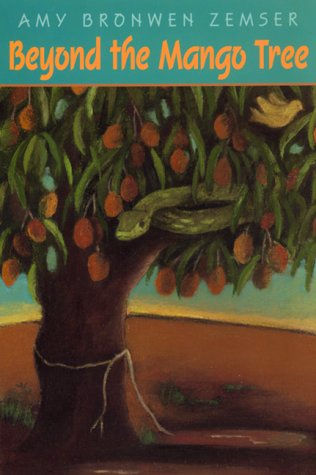
If you are looking for a light, uplifting book, this is not the one to choose. While beautifully-written, it is a sad, even tragic, story about Sarina, a 12-year old American girl living in Liberia. Sarina’s father, busy with his business responsibilities in other parts of the country, leaves her alone to care for her mother, a woman whose severe diabetes leaves her both physically frail and emotionally unstable. Fearful of losing her daughter, Sarina’s mother ties Sarina to the mango tree in their yard. When the lonely Sarina meets Boima, a young Liberian boy, she keeps their friendship a secret for fear her mother will prevent her from seeing him. Through their friendship she learns about the Liberian life beyond her own yard – both its joys and its tragic sorrows. Although the book is labeled as being for age 10 and up, its content seems more appropriate for slightly older readers.
Reading level: age 11-14 years