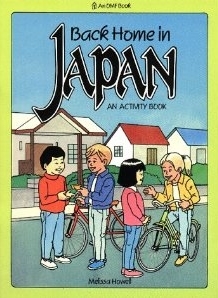
Missionary kids John and Lisa are glad to get back to Japan after furlough in America. Although they are sad to leave their relatives, they enjoy moving into their new house, making friends with the neighbor kids, and eating familiar Japanese food. Later, their family travels from their home in Sapporo in the north all the way to the southern city of Nagasaki, visiting various cities along the way. This is basically a coloring book with a storyline about the life of two MKs. Activities are interspersed throughout the book (e.g. mazes, crosswords, word searches, Japanese character writing, dot-to-dot). There is also an accompanying Parent/Teacher Guide that gives more information on Japan and gives lesson plans for five lessons, suitable for a children’s missions conference or a similar event.
Reading level: age 6-9 years
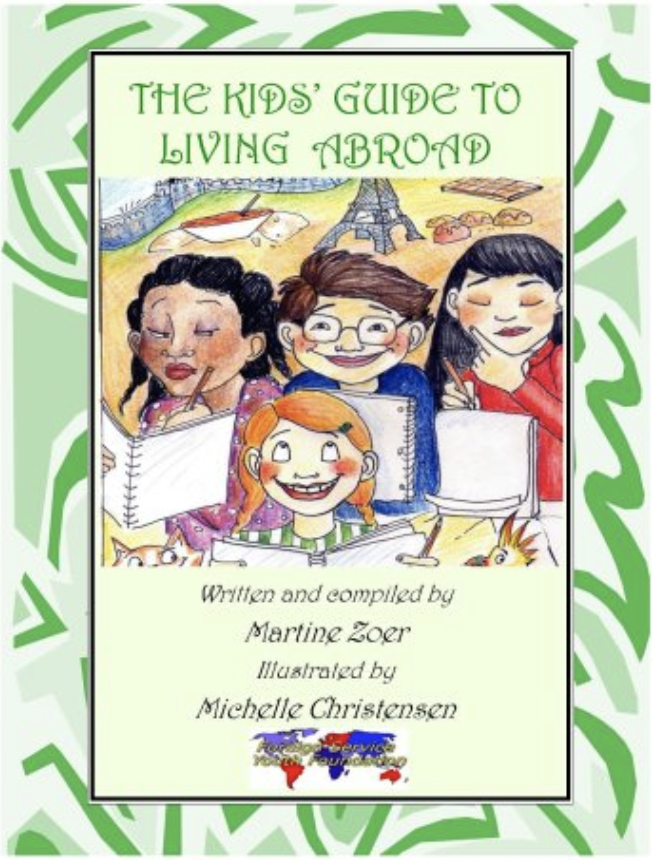
This excellent book for children has sections (5 chapters each) about preparing to move; moving; exploring the new culture; settling in; dealing with “the realities”; and moving on. In each chapter expat kids, ages 8-13, share their own experiences, then the author answers common questions & closes with a “Real Life Tip.” “The Kids’ Guide to Living Abroad” is relevant for elementary/primary students and above.
Kids and parents can read each chapter as it becomes relevant rather than all at once and sections can be skipped if they don’t apply. A lot of ground is covered!
Reading level: age 8 to 12 years
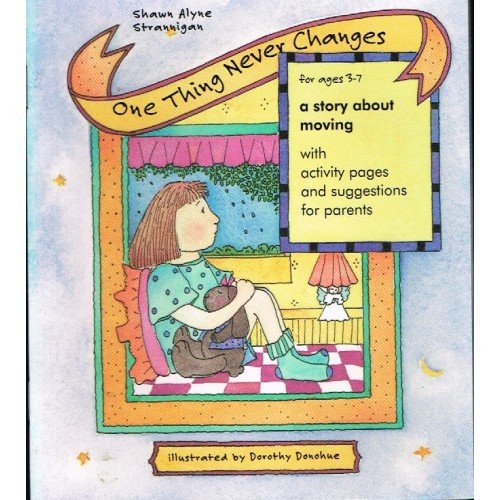
One Thing Never Changes begins with a list of suggestions for parents moving with children. Most of these apply to moves overseas, though some will need to be modified.
The story follows Jenna who is moving because her daddy got a job in a different city. Relieved at first because she can bring her toys and bed, she then realizes that she can’t bring her best friend and her feelings change. Jenna’s parents assure her that she can write to her friend and call her sometimes. Her Sunday School teacher reminds Jenna that, although moving will mean many changes, one thing never changes: Jesus will always love her, always be with her, and always hear her prayers. This is an “I Can Understand Book” – a series of small booklet-style books written to help children face difficult situations (e.g. the death of a loved one, a parent’s illness, etc.).
Reading level: age 5-8 years.
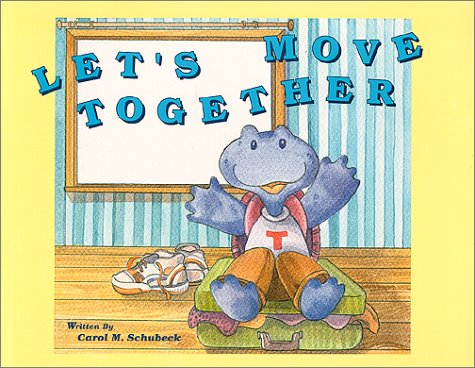
Lets Move Together isn’t a story and it isn’t exactly a workbook, either. It’s a “how to” for children, walking them through the process of moving. Written for the expat community, it refers to differences that are unique to moving abroad, like learning a new language. The book is divided into three sections: feelings, thoughts and actions.
Feelings: addresses being happy, sad or angry about moving and how to express each one in a healthy way.
Thoughts: focuses on what questions to ask about where the family is moving, what to expect from a new home and school, etc
Actions: researching where the family is moving to, building a memory box, giving away toys that cannot be brought along, saying goodbye well, and making new friends
Reading level: age 4 and up.
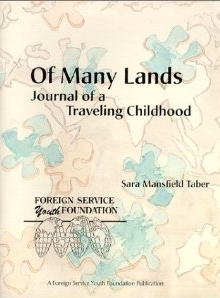
Written for young and not-as-young people who grew up overseas, this journal is a place to capture and reflect on the stories of an exceptional childhood. Divided into sections including My Places, My Family, My Schools, and My Home Country, the author describes her own memories and invites readers to follow suit. The journal includes targeted questions to get the creative juices flowing and allows ample space for personalized responses.
The author’s note on Amazon describes her vision for her book: “My aim in creating this journal for mobile young and not-so-young people has been to provide people raised as I was, in several countries, with an opportunity to gather together into one place the many aspects of themselves. I want to offer them a chance to assemble the places they have lived, the many odd life experiences they have had, and the personal tastes and perspectives they have developed and to see them united as a whole.
“At best, my hope is that the journal will help a person raised on the wing to put together his or her personal story, to record, in written form, perhaps in fragments, who he or she is. I envision the journal as a learning and self-exploration tool that validates both the particulars of each individual’s experience. It can be difficult, as I know first hand, for the country-hopping child to place or even assemble all the stray elements of an exciting but challenging lifestyle. My goal in preparing this journal has been to aid these people ‘of many lands’ in the long process of putting together the stories of their lives. Even if they never write a sentence in the book, they may, just by reading through the journal, glean a helpful memory or thought. A reader may regard the journal as an invitation: an invitation to set down the story of his or her own unique life.”
This book is sadly out-of-print and very expensive on Amazon right now, but a great find for those who can get their hands on it.